For years, the drone industry has focused much of its attention on improving the aircraft itself. Longer flight times, better cameras, advanced autonomy, increased payload capacities, and more sophisticated navigation systems have dominated the conversation about where unmanned aerial technology is headed.
And for good reason. These advancements have expanded what unmanned aircraft can accomplish across defense, telecommunications, emergency response, infrastructure, and commercial applications.
But there’s a question we believe deserves more attention.
What happens when the aircraft is no longer the biggest limitation?
At Unmanned Systems and Solutions (USaS), nearly a decade of working with unmanned aerial systems has shaped how we think about the future of the industry. We’ve seen firsthand that improving the aircraft is only part of the equation.
The next significant advancement may come from something far less visible: the infrastructure supporting it.
We’ve Spent Years Improving Flight. What About Everything Else?
When evaluating a drone system, it’s natural to start with the aircraft. How high can it fly? How much can it carry? How long can it stay airborne?
Those are important questions, but they don’t necessarily tell us whether a system can accomplish what an operator needs it to do.
Consider a drone equipped with advanced communications equipment. The aircraft may have the lifting capacity to carry the payload and the stability to maintain its position. But if the power supply cannot sustain the equipment, or the communications infrastructure cannot reliably transmit the information being collected, the aircraft’s capabilities become less relevant.
The same principle applies to intelligence, surveillance, reconnaissance, and emergency response applications.
A sophisticated aerial platform is only as useful as the systems that allow it to operate.
The aircraft gets the attention. The infrastructure determines how much of its potential can actually be used.
The Power Problem Isn’t Just About Flight Time
Battery technology has improved considerably, but batteries still impose practical limitations on unmanned aerial operations.
Those limitations become especially apparent as payload requirements increase.
A drone carrying a lightweight camera has very different power requirements from one supporting telecommunications equipment, tactical radios, multiple sensors, or other specialized hardware.
As payload weight and power consumption increase, battery-dependent flight duration becomes an even greater consideration.
This creates an interesting challenge for the industry. Manufacturers can continue improving aircraft efficiency and battery performance, but certain applications require something fundamentally different from the traditional launch, operate, land, and recharge cycle.
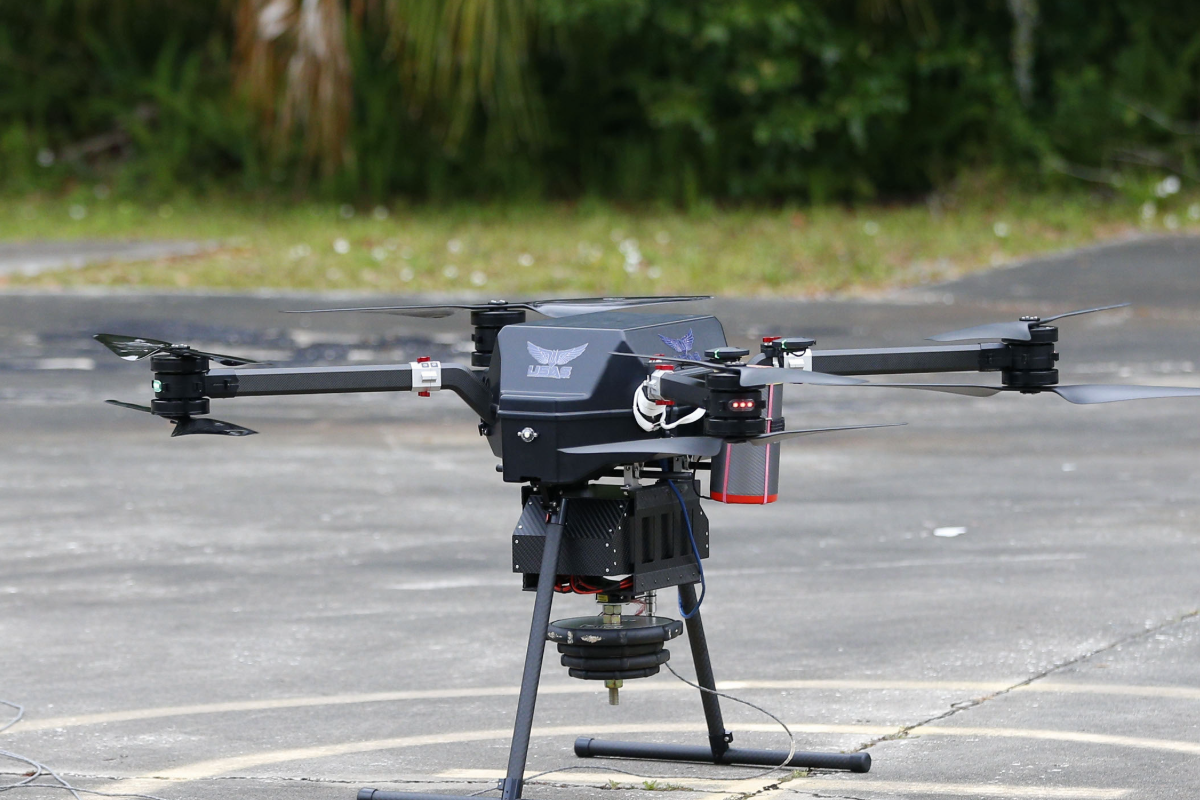
At USaS, we’ve approached this challenge through our Long Endurance Aerial Platform (LEAP) technology.
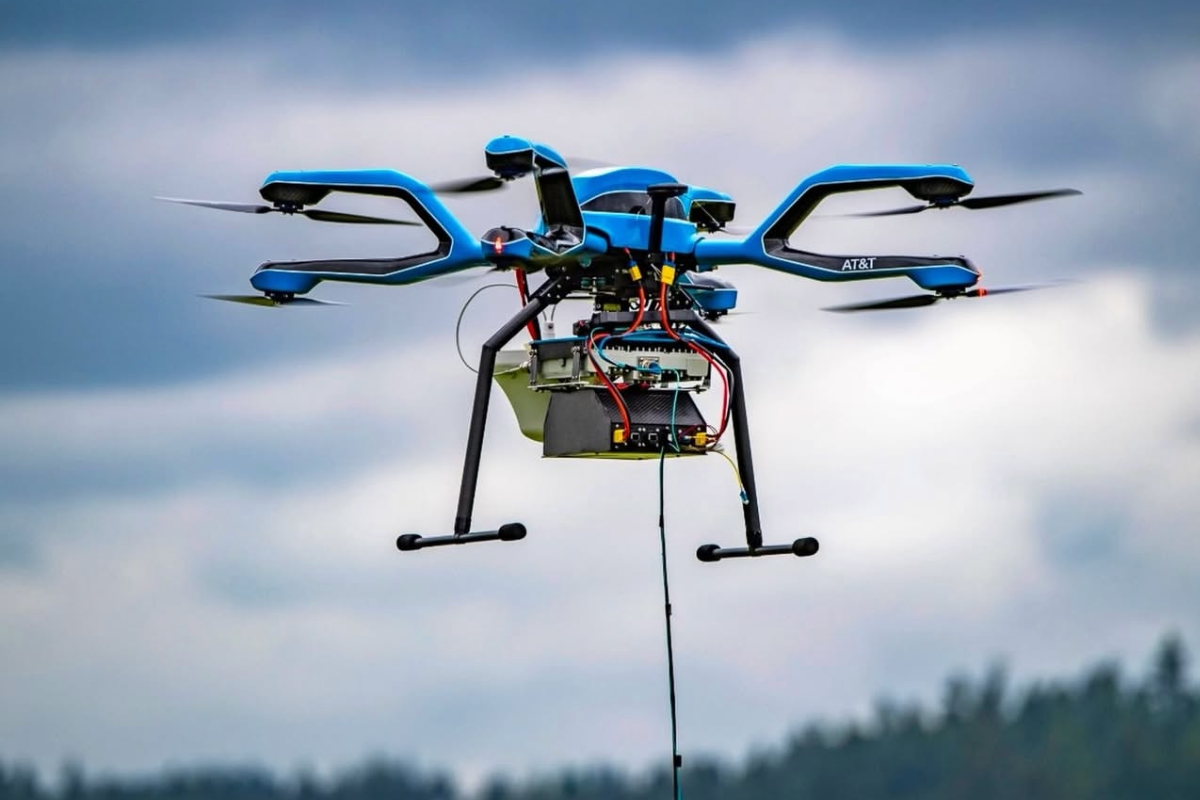
By delivering continuous power from the ground through a tether, LEAP systems can support extended aerial operations without relying exclusively on the aircraft’s onboard battery capacity.
Our LEAP Solo 5K, for example, provides 5 kW of power for the aircraft and its payloads while supporting up to 21 pounds of customer equipment.
The larger LEAP Solo 10K and LEAP Solo 20K systems expand those capabilities for increasingly demanding payload requirements.
The significance goes beyond keeping a drone airborne longer.
It changes the types of equipment that can be elevated, the duration for which that equipment can operate, and the way organizations can plan their aerial operations.
What If the Ground Station Became Just as Important as the Aircraft?
Traditionally, the ground equipment supporting a drone is viewed as a necessary component of flight operations.
But we believe the ground station has the potential to play a much larger role.
Imagine an aerial platform carrying communications equipment hundreds of feet above the ground. The aircraft provides elevation, but the equipment still needs power, data connectivity, and a reliable connection to the broader communications network.
That connection might involve fiber, microwave, LEO satellite, GEO satellite, or other communications infrastructure.
Instead of treating those systems as separate components, they can be integrated into a single operational architecture.
This is an important part of how we’ve developed the LEAP product line.
Our ground systems can provide more than continuous power. They can also serve as a connection point for communications backhaul, linking elevated payloads to the networks and systems that need the information.
LEAP Solo systems support secure data transfer capabilities of up to 20 Gbps, allowing power delivery and high-bandwidth communications to be considered together.
For telecommunications providers, defense organizations, and emergency response teams, that integration can be just as valuable as improvements to the aircraft itself.
After all, getting equipment into the air is only useful if that equipment can perform its intended function and communicate with the people relying on it.
The Future May Be Less About Individual Drones and More About Connected Systems
One of the most interesting developments in unmanned technology is the changing role of the aircraft.
For many applications, drones are no longer simply flying cameras or standalone tools. They are becoming components of much larger operational networks.
An elevated platform can support temporary cellular coverage, tactical communications, surveillance equipment, data transmission, and other capabilities that would traditionally require fixed infrastructure.
We’ve already seen the value of this approach through real-world deployments.
Since 2017, USaS technology has supported operations involving AT&T’s Flying COW (Cell on Wings) program, including communications support following major hurricanes and wildfires, as well as coverage for large public events.
These deployments demonstrate an important distinction.
The value of an unmanned system isn’t always measured by how far the aircraft travels or how independently it navigates.
Sometimes, its greatest value comes from maintaining a reliable position above the ground while supporting the equipment and networks beneath it.
That changes how we should think about innovation.
Instead of asking only how to build a better drone, we should also be asking how to build better systems around it.
The Most Important Innovation Might Be the One You Never See
There is no question that autonomy, artificial intelligence, advanced sensors, and improved aircraft designs will continue to influence the future of unmanned aviation.
But we believe some of the industry’s most meaningful advancements will happen outside the aircraft.
More capable power distribution systems could allow increasingly demanding payloads to remain elevated for extended periods. Better communications infrastructure could improve how aerial platforms exchange information with ground networks. More integrated system architectures could simplify deployment and expand the range of applications that unmanned technology can support.
And as those capabilities improve, the aircraft itself becomes part of something much larger.
At USaS, this perspective has guided our work since we began developing and deploying tethered aerial systems in 2017.
Our experience has shown us that the challenge isn’t simply getting an aircraft into the sky. It’s making sure the technology it carries can continue doing its job once it’s there.
That’s why we continue developing the power, communications, and integration capabilities behind our LEAP product line.
The next major breakthrough in drone technology might not be a smarter aircraft, a better camera, or a new autonomous capability.
It might be the infrastructure that finally allows us to use the capabilities we already have to their full potential.
Learn more about the LEAP product line and our approach to unmanned aerial systems at https://unmannedsas.com/