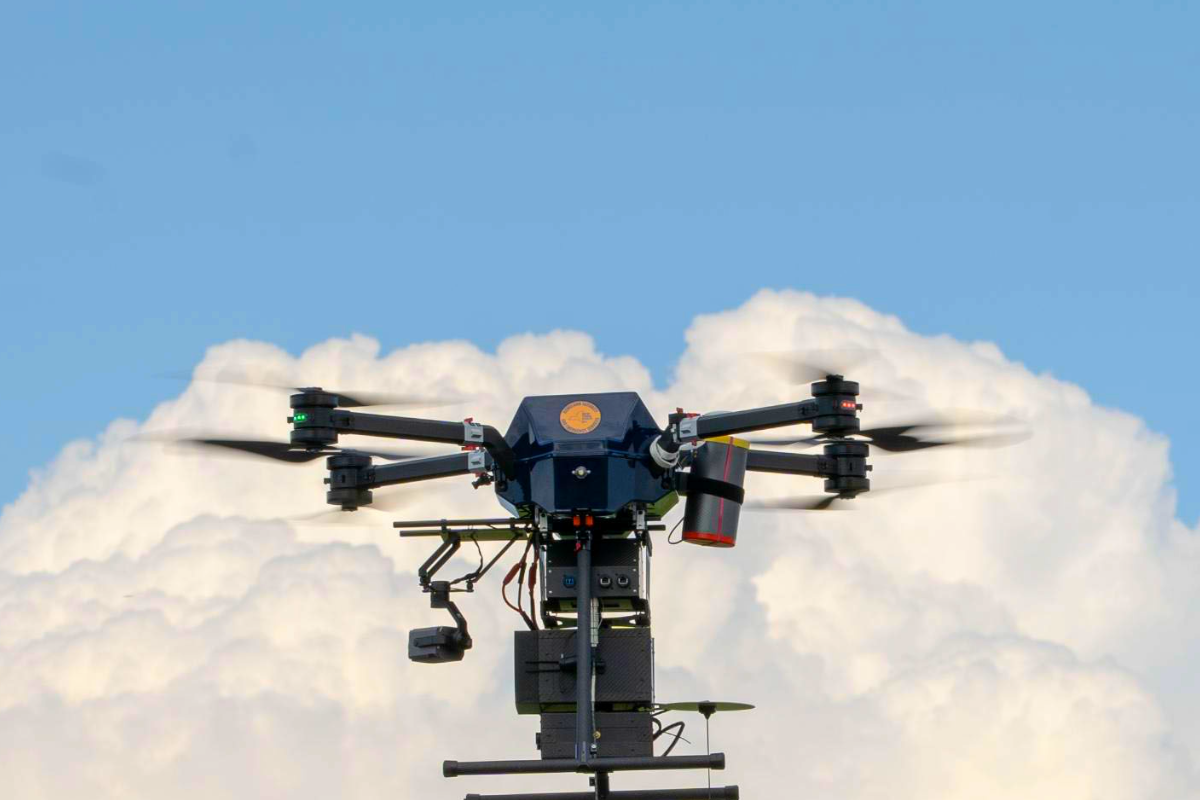
AI Can Fly Drones. But Can It Run Missions?
Artificial intelligence is rapidly changing the unmanned systems industry. Autonomous navigation, object recognition, automated flight stabilization, and target tracking are all advancing at an impressive pace. Every few months, another demonstration appears showing drones operating with less human interaction and more automated decision making.
As these technologies continue to evolve, many organizations are beginning to ask an important question:
Will AI eventually replace human operators and fully run drone missions on its own?
The answer is more complicated than most headlines suggest.
Because while AI can absolutely improve how drones fly, flying is only one small part of running a successful mission.
Flying A Drone And Running A Mission Are Not The Same Thing
The drone industry often focuses heavily on the aircraft itself. Discussions typically revolve around autonomous flight paths, obstacle avoidance, tracking capabilities, or how little operator input a system requires.
Those advancements matter, but they can also create a misleading picture of what mission capability actually looks like in the real world.
A drone provides flight.
A mission requires infrastructure.
Real world missions involve far more than keeping an aircraft stable in the air. They require persistent power, reliable communications, secure data transfer, payload integration, resilient backhaul, environmental adaptability, and the ability to maintain capability when conditions change unexpectedly.
That distinction becomes especially important outside controlled demonstrations.
Controlled Demonstrations Rarely Reflect Real Missions
Many autonomous drone demonstrations happen in controlled environments with fixed timelines, predictable conditions, limited payloads, and clearly defined objectives. Under those circumstances, AI driven flight can appear nearly flawless.
Real missions are different.
Weather changes.
Mission duration extends.
Payload requirements increase.
Communications environments shift.
Operators rotate.
Coverage areas move.
Data demands grow unexpectedly.
In those moments, mission success depends less on whether the drone can autonomously maintain altitude and more on whether the entire system can continue operating without interruption.
This is where many organizations overestimate what autonomy alone can accomplish.
A drone may be capable of autonomous flight for thirty minutes during a demonstration.
That does not necessarily mean the overall system can support a twelve hour ISR mission, maintain secure communications infrastructure, or continuously transmit data back to decision makers under real operational conditions.
AI Still Depends On Continuous Power
One of the biggest limitations facing autonomous drones today is endurance.
Artificial intelligence requires power.
Payloads require power.
Communications systems require power.
Backhaul systems require power.
As payload weight increases, battery dependent systems lose endurance rapidly. Heavy lift drones carrying ISR payloads, tactical radios, LTE systems, sensors, or integrated communications equipment drain batteries significantly faster than lightweight commercial drones operating under ideal conditions.
This challenge becomes even more severe during extended missions.
A mission may need to remain active far longer than originally planned. Operators may need to maintain persistent ISR over a specific location or continue providing elevated communications infrastructure for hours or even days.
Battery limitations become operational limitations.
That is one of the reasons tethered drone systems are becoming increasingly important across defense, disaster response, public safety, telecommunications, and critical infrastructure environments.
Persistent Infrastructure Is Becoming More Important Than Flight Alone
The future of unmanned systems is not simply about making drones more autonomous.
It is about building systems that can sustain capability.
USaS was founded by experienced telecommunications executives and military veterans with more than sixty years of mission critical hardware, software, and services experience. The company designs secure, payload agnostic tethered drone platforms that integrate with the payloads organizations already use, allowing teams to deploy faster, fly longer, and transmit data securely.
That system level approach becomes critical when missions require persistent ISR, elevated communications, or continuous aerial infrastructure.
Unlike traditional battery dependent systems, tethered drone systems provide continuous power while simultaneously supporting high bandwidth secure data transfer and integrated backhaul capabilities. These systems are designed not simply to fly, but to maintain operational capability over extended periods of time.
Modern Missions Depend On More Than The Aircraft
Today’s missions increasingly require drones to function as part of a larger operational network.
That means supporting payloads, transmitting ISR feeds, integrating communications systems, maintaining secure connectivity, and delivering data to decision makers in real time.
Backhaul has become a major part of that equation.
Modern drone missions may rely on LTE, LEO satellite systems like Starlink, MANET radios, microwave links, or fiber infrastructure to move data where it needs to go. Without reliable backhaul, even the most advanced autonomous drone loses operational value because the intelligence it gathers cannot effectively reach the people making decisions.
This is why infrastructure matters just as much as autonomy.
AI may automate portions of flight, but missions still depend on power distribution, tether management, payload integration, secure communications, and resilient network architecture.
The Industry Is Moving Toward Persistent Mission Capability
This shift is already visible across the unmanned systems market.
Organizations are increasingly prioritizing endurance, persistence, payload flexibility, and communications integration over simple flight demonstrations. The conversation is moving away from “Can the drone fly autonomously?” and toward “Can the system sustain capability when the mission becomes unpredictable?”
USaS developed the LEAP product line around that exact reality.
The LEAP Solo 5K delivers 5kW of continuous power and supports payloads up to 21 pounds while maintaining secure high bandwidth data transfer. The LEAP Solo 10K expands that capability even further with support for payloads exceeding 50 pounds. Both systems are designed specifically for extended mission environments where endurance and operational continuity matter more than short duration demonstrations.
The company’s operational history reinforces why this matters. USaS systems have supported deployments across disaster response, border operations, communications infrastructure testing, ISR exercises, and large scale events including hurricanes, wildfire response, DHS missions, and military exercises.
Those environments demand much more than autonomous flight.
They demand persistent capability.
The Future Is Not Just Autonomous Flight. It Is Autonomous Infrastructure.
Artificial intelligence will continue to transform the drone industry. Autonomous navigation will improve. Sensor fusion will improve. Automated coordination between systems will improve.
But autonomy alone does not create mission success.
The organizations that lead the next generation of unmanned systems will be the ones that understand the difference between automating flight and sustaining missions.
Because AI can absolutely fly drones.
But missions still depend on persistent power, resilient communications, secure data transfer, integrated payloads, reliable backhaul, and infrastructure designed to operate long after a demonstration ends.