When most people evaluate a drone, they focus on the aircraft.
They look at flight time, speed, range, camera quality, and other performance specifications. These metrics are easy to understand and easy to compare. They also make for impressive demonstrations.
The problem is that missions are not won by aircraft specifications.
They are won by outcomes.
A drone can still be airborne while providing little operational value. Likewise, a drone can have excellent flight performance on paper and still become a liability when mission requirements change.
That is why one of the most important questions any organization can ask is not how long a drone can fly, but rather when it stops being useful.
Because the moment a drone becomes operationally useless is often long before it falls out of the sky.
THE DIFFERENCE BETWEEN FLIGHT AND CAPABILITY
There is a tendency throughout the drone industry to confuse flight with capability.
The assumption is understandable. If a drone can fly, then it must be accomplishing its purpose.
In reality, flight is only one component of a much larger system.
The true purpose of a drone is not simply to remain airborne. It is to provide intelligence, communications, surveillance, situational awareness, or some other capability that supports decision-making. Once the system can no longer provide that capability, the aircraft itself becomes far less relevant.
Consider an ISR mission.
The aircraft may still be flying, but if communications become unreliable, operators lose visibility into the environment, or the system must return to base before the mission concludes, the value of that flight begins to disappear.
The aircraft remains in the air.
The capability does not.
That distinction is critical because organizations often procure drones based on aircraft performance rather than mission performance.
The aircraft is the tool.
The mission outcome is the objective.
THE MOMENT MISSIONS STOP FOLLOWING THE PLAN
Most drone demonstrations take place under controlled conditions.
The duration is known in advance. The weather is favorable. The payload requirements are predetermined. Operators know exactly what they are trying to accomplish and exactly how long the aircraft needs to remain in the air.
Under those circumstances, many systems perform exceptionally well.
Real missions are different.
A mission may need to continue longer than expected. Operators may be asked to relocate coverage areas. Weather conditions may deteriorate. Different teams may rotate through the mission. Communications requirements may increase. Additional payloads may become necessary.
These variables are difficult to replicate during a demonstration, but they occur routinely during actual deployments. A drone that performs flawlessly during a thirty-minute test flight may encounter significant limitations when asked to provide persistent coverage for several hours or multiple operational periods. Controlled demonstrations simply do not expose the same challenges that emerge during real-world use.
This is why operational experience matters.
The true test of a system is not how it performs when everything goes according to plan. The true test is how it performs when the plan changes.
THE PAYLOAD PROBLEM FEW PEOPLE TALK ABOUT
Payload requirements further complicate the equation.
As drone technology advances, organizations are demanding more from aerial platforms. Higher-resolution cameras, thermal systems, communications equipment, sensors, radios, and other mission-specific payloads all increase the value a drone can provide.
Unfortunately, they also increase power consumption.
This becomes particularly important in heavy-lift applications where operators need to support larger and more capable payloads. Every additional pound placed on an aircraft requires energy. As payload demands increase, battery-powered systems often experience a corresponding reduction in endurance.
The result is a tradeoff that many organizations underestimate.
The very payload that makes a mission possible can simultaneously reduce the amount of time the aircraft is able to support that mission.
As mission requirements grow, endurance often shrinks.
For operators who require continuous coverage, that tradeoff can quickly become a limiting factor.
WHEN COVERAGE MATTERS MOST
Perhaps the greatest challenge with battery-dependent systems is that they rarely need to land at a convenient time.
A developing situation does not pause because a battery is depleted.
An active search effort does not stop because an aircraft needs servicing.
Communications requirements do not disappear because a flight timer reaches zero.
Yet these are exactly the moments when many traditional systems must return to the ground.
Coverage is interrupted.
Situational awareness is reduced.
Operators are forced to manage aircraft limitations while simultaneously managing the mission itself.
The mission continues.
The capability does not.
For organizations that rely on persistent ISR, communications, or aerial overwatch, these interruptions can have significant consequences.
DESIGNING FOR THE MISSION, NOT THE DEMONSTRATION
This reality has driven growing interest in systems designed around persistence rather than short-duration flight.
The objective is not simply to launch an aircraft. The objective is to maintain capability for as long as the mission requires.
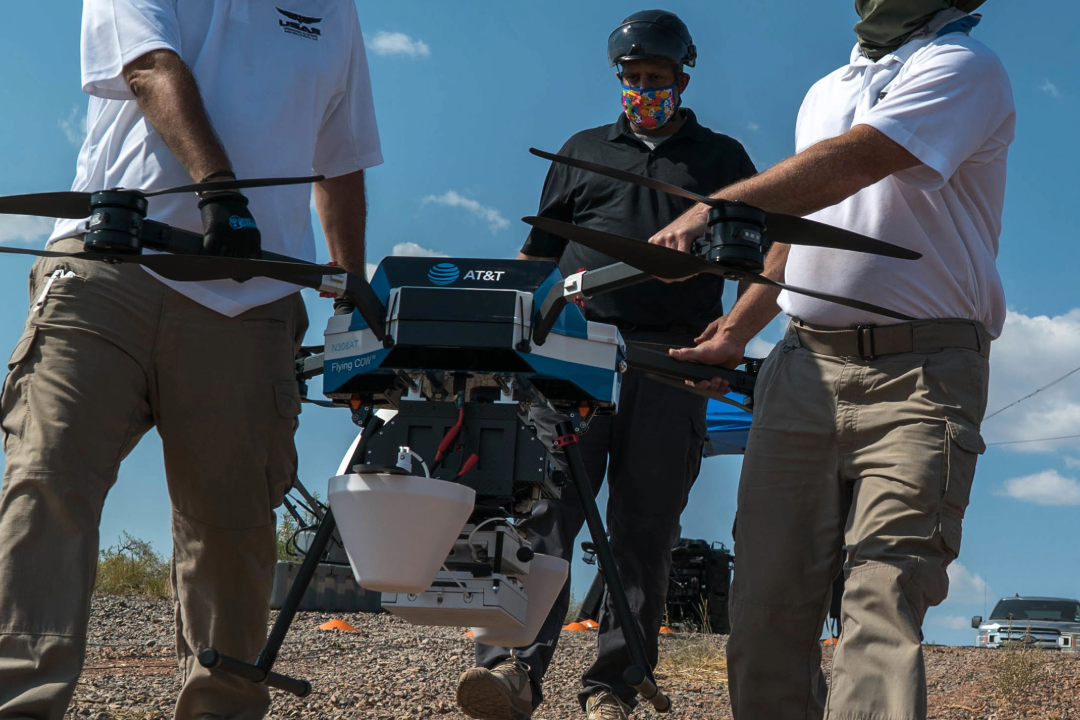
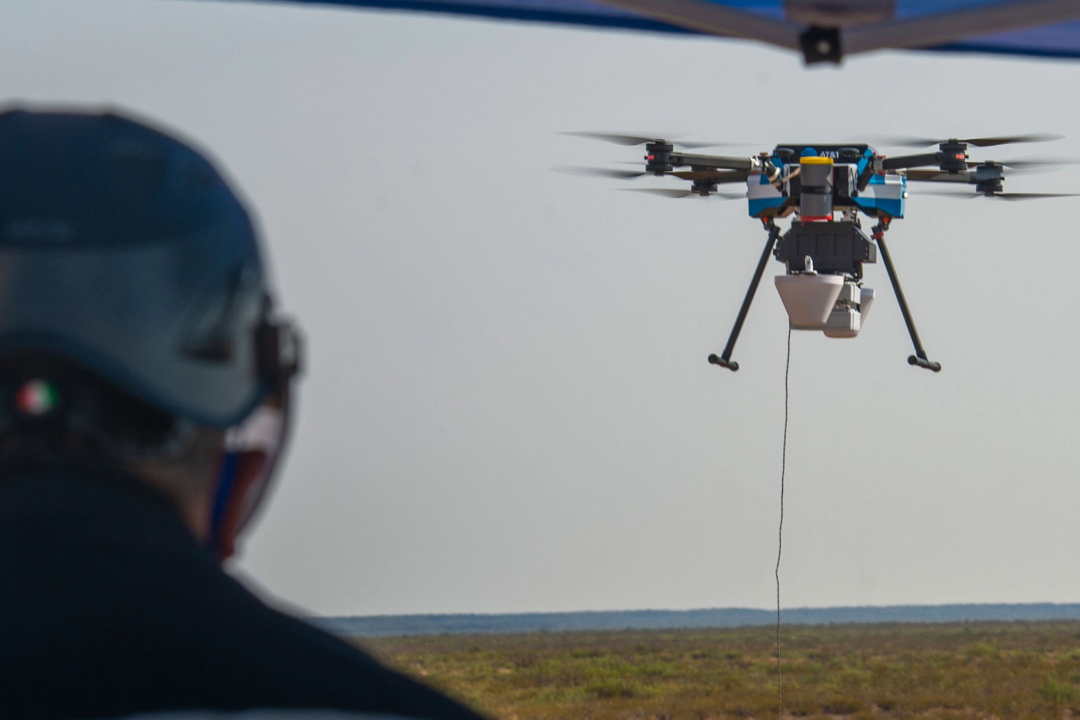
That philosophy is reflected in the LEAP product line and LEAP Tactical system. Rather than treating the drone as a standalone aircraft, the platform is designed as a complete aerial system that supports power, communications, payload integration, and data transport simultaneously. LEAP Tactical provides operators with persistent ISR and communications capabilities while remaining highly portable, rapidly deployable, and configurable through its Overwatch, Pursuit, and Cloak operating modes.
The focus shifts from maximizing flight performance to maximizing mission effectiveness.
That may sound like a subtle difference.
In practice, it changes everything.
THE QUESTION THAT MATTERS
The drone industry spends considerable time discussing how far, how fast, and how high an aircraft can fly.
Those metrics have value.
But they are not the metrics that determine mission success.
The better question is far simpler.
When conditions change, does the capability remain?
Because the moment a drone becomes operationally useless is not when it stops flying.
It is when it stops delivering the outcome the mission depends on.
And in real-world operations, that distinction is often the difference between a successful deployment and a missed opportunity.