For years, the drone industry grouped everything under one label. Hobby drones, prosumer platforms, and mission critical systems were often discussed as if they served the same purpose. That era is ending.
A clear divide is emerging between hobby drones and mission systems. The difference is no longer about size or price. It is about reliability, persistence, and whether the system is built for real operational demands.
Why Hobby Drones Hit a Ceiling
Hobby drones are optimized for accessibility and convenience. They prioritize portability, ease of use, and short flight times. For recreational flying, photography, or casual inspection, they work well.
But when missions require continuous uptime, secure data, heavy payloads, or predictable performance, hobby drones reach their limits quickly. Battery dependency, wireless interference, and limited payload support make them unsuitable for persistent operations.
These constraints are not flaws. They are design choices. Hobby drones are aircraft first.
Mission Systems Require a Different Approach
Mission systems are designed around outcomes, not flight time. They are built to support operations that cannot afford interruptions or uncertainty.
This is where tethered drone systems separate themselves from hobby platforms.
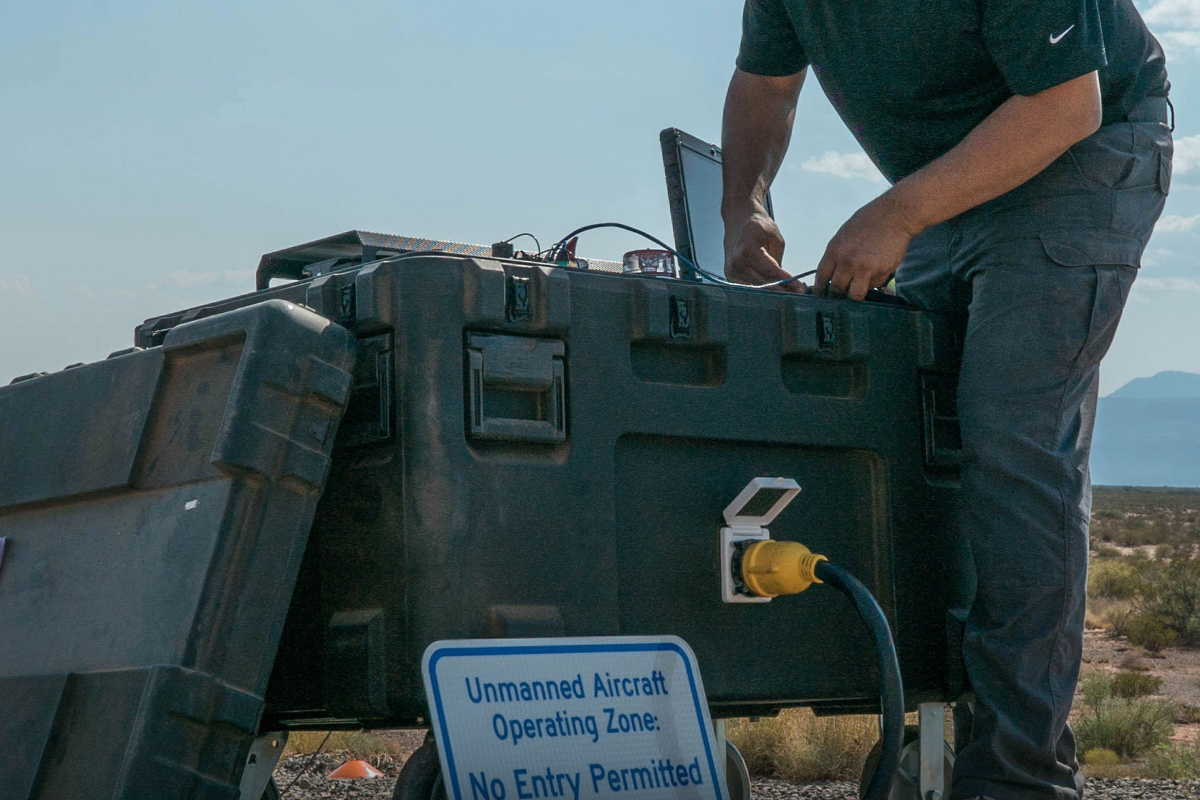
A tethered drone is not launched for a quick task and recovered. It is deployed as part of a larger system. Constant power delivery eliminates battery constraints. High bandwidth data links enable secure, uninterrupted information flow. The result is persistence measured in days or weeks, not minutes.
Tethered drones function less like aircraft and more like infrastructure.
The Role of Tethered Drones In the Divide
Tethered drones are accelerating the split between hobby drones and mission systems. They introduce capabilities that hobby platforms are not designed to support.
Instead of optimizing for mobility alone, tethered drone systems optimize for reliability, integration, and endurance. They support heavier payloads. They reduce exposure to spectrum interference. They integrate directly into ground based power and data architecture.
For missions such as perimeter security, border monitoring, communications relay, and continuous ISR, this approach is not optional. It is foundational.
Leap Solo 5K And 10K as Mission Systems
The LEAP Solo 5K and LEAP Solo 10K are examples of systems built firmly on the mission side of the divide.
The LEAP Solo 5K provides five kilowatts of continuous power to support extended operations and demanding payloads. It enables secure, high speed data transfer while maintaining the stability required for persistent deployment.
The LEAP Solo 10K expands those capabilities further. With ten kilowatts of available power, higher payload capacity, and twenty gigabit per second data throughput, it supports advanced sensors, communications payloads, and evolving mission requirements. It is designed for environments where uptime and scalability matter more than convenience.
Both systems reflect a shift away from treating drones as disposable aircraft and toward treating them as operational infrastructure.
What This Divide Means Going Forward
As mission requirements grow more complex, the gap between hobby drones and mission systems will continue to widen. Organizations will no longer ask whether a drone can fly. They will ask whether the system can stay.
Tethered drones and tethered drone systems answer that question directly. They are built for persistence, integration, and mission assurance.
The future of unmanned systems will not be defined by who flies the fastest or farthest. It will be defined by which systems can deliver reliable capability when it matters most.
And that is where the divide becomes permanent.