When a hurricane makes landfall, a wildfire spreads through a community, or a major natural disaster damages critical infrastructure, one of the first priorities is establishing reliable communication.
Emergency responders need to coordinate personnel, communicate with command centers, and maintain contact with affected communities. Yet the same events that create an urgent need for communication can also damage the infrastructure that makes it possible.
Cell towers lose power. Fiber connections are damaged. Roads become inaccessible. Even satellite communications can face limitations when buildings, vegetation, or severe weather interfere with connectivity. Restoring reliable communication networks can take days or longer, depending on the severity of the disaster.
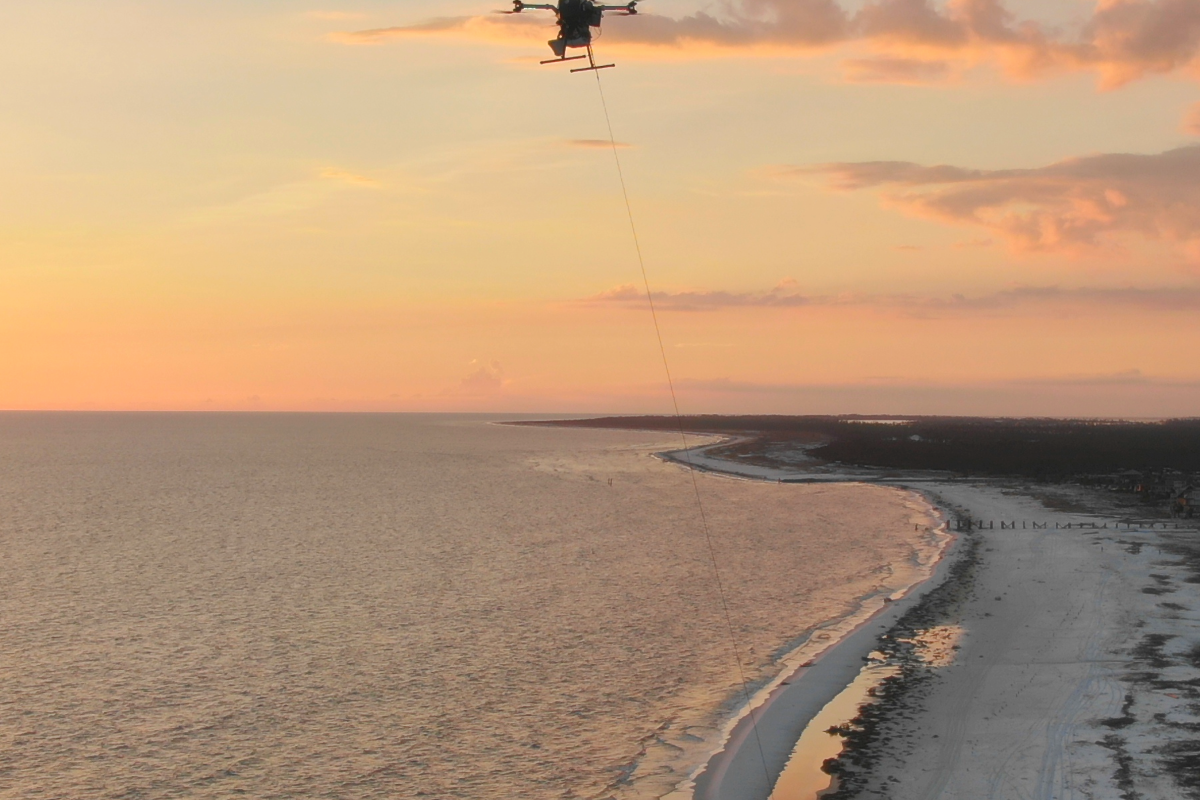
But emergency communications technology is changing, and some of the most important advancements aren’t happening on the ground.
They’re happening hundreds of feet above it.
At Unmanned Systems and Solutions (USaS), we’ve spent nearly a decade developing tethered unmanned aerial systems designed to support communications infrastructure from the air. We’re proud to support telecommunications leaders such as AT&T, with technology that helps make aerial connectivity possible.
Why Elevation Changes Emergency Communications
Communications equipment positioned at ground level can encounter limitations caused by buildings, terrain, vegetation, and other physical obstructions. Elevating that equipment can improve line-of-sight conditions and expand its ability to communicate with devices and infrastructure across a wider area.
A communications payload positioned hundreds of feet above the ground can provide a useful vantage point without requiring the construction of a permanent tower.
However, elevation alone doesn’t solve the entire problem.
The equipment must remain airborne, receive sufficient power, and maintain a reliable connection to the broader communications network. Depending on the mission, it may need to operate continuously for hours or longer.
That’s where tethered unmanned aerial systems introduce an important advantage.
Unlike conventional battery-powered drones that must periodically land to recharge or replace batteries, tethered aircraft can receive continuous electrical power from a ground-based system. This allows an aerial communications platform to remain elevated for extended periods, provided operating conditions and power availability support the mission.
For emergency communications, that persistence is especially valuable. Restoring connectivity for a short demonstration is one thing. Maintaining it throughout an evolving emergency is an entirely different requirement.
Flying Cell Towers Are Already a Reality
The concept of using drones to support cellular networks isn’t theoretical. Aerial communications technology has already been utilized during major disasters to help restore connectivity when conventional infrastructure is unavailable.
One example is AT&T’s Flying Cell on Wings (Flying COW™) technology, which uses an unmanned aerial platform to elevate telecommunications equipment and provide cellular coverage from above.
Following Hurricane Maria in 2017, aerial cellular technology was deployed in Puerto Rico to help restore communications in areas where traditional networks had suffered extensive damage.
That deployment demonstrated an important possibility: cellular infrastructure doesn’t always have to be attached to a permanent tower.
USaS is proud to support major telecommunications providers, including AT&T, with tethered aerial technology designed for demanding communications applications.
These platforms don’t replace permanent telecommunications infrastructure, but they can help bridge the gap between an immediate communications requirement and the restoration of conventional networks.
The Aircraft Is Only Half the Solution
Getting communications equipment into the air is important, but keeping it connected to the broader network is equally critical.
A drone carrying cellular equipment may be capable of communicating with devices on the ground, but that traffic still needs a pathway into the telecommunications network. This connection, known as backhaul, is essential.
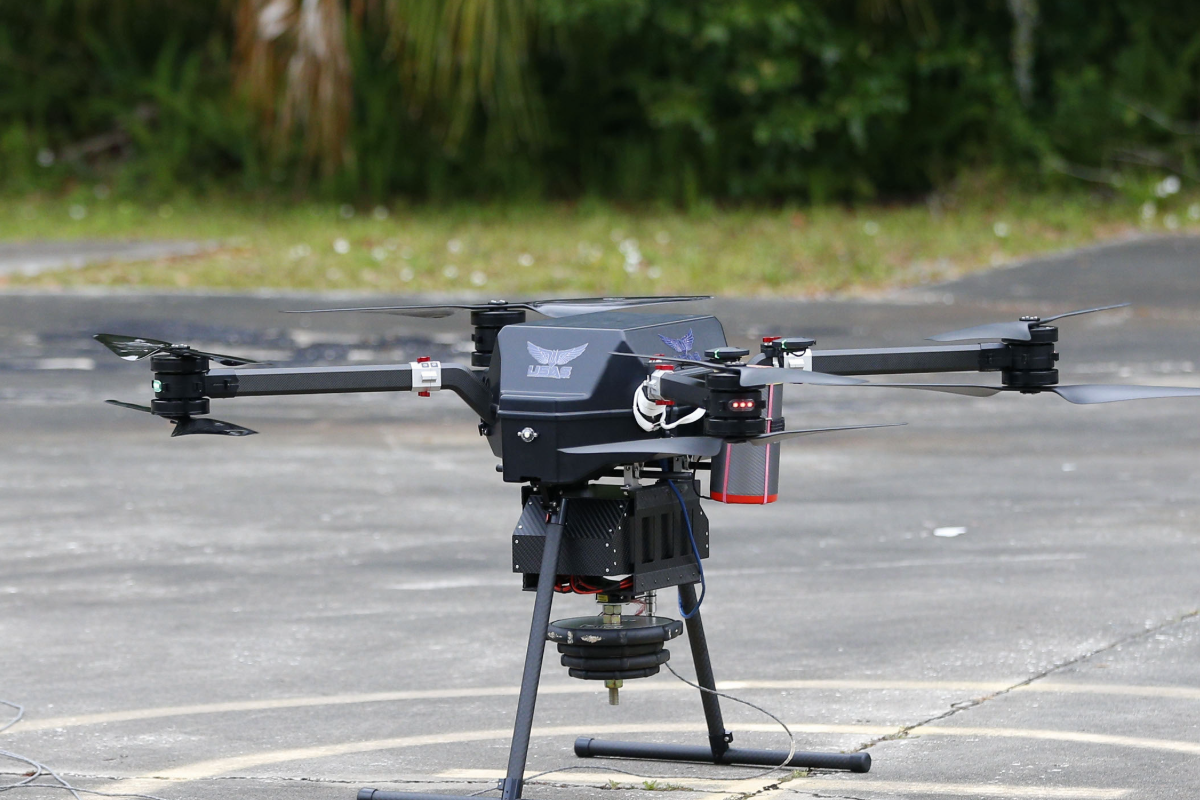
At USaS, our Long Endurance Aerial Platform (LEAP) systems are designed to support more than sustained flight. Their ground infrastructure can also serve as a communications hub, connecting elevated payloads to technologies such as low Earth orbit (LEO) satellites, geostationary (GEO) satellites, fiber, microwave links, and mobile ad hoc networks (MANET).
This flexibility is particularly important during emergencies, when available communications infrastructure can vary dramatically between locations.
Getting communications equipment into the air is only half the job. Making that equipment useful to the people on the ground is what matters.
Why Long-Endurance Flight Matters During a Disaster
Emergency response missions rarely follow a predictable schedule. A communications platform may initially be needed for several hours, only for changing conditions or delayed infrastructure restoration to extend that requirement.
Conventional battery-powered drones must eventually descend to recharge or exchange batteries, creating potential interruptions in coverage. As communications payloads become heavier and more power-intensive, available flight time can decrease even further.
USaS addresses these challenges through its LEAP product line.
The LEAP Solo 5K delivers 5 kW of power for the aircraft and its payloads, supports customer payloads weighing up to 21 pounds, and can operate at elevations up to 400 feet above ground level.
For applications requiring greater payload capacity, the LEAP Solo 10K and LEAP Solo 20K provide higher-power configurations, with the LEAP Solo 20K designed to support up to 150 pounds of customer payloads.
These capabilities allow organizations to focus on the equipment they need to elevate and how long it must remain available, rather than relying exclusively on onboard battery endurance.
Emergency Communications Go Beyond Cellular Service
Although restoring cellular connectivity is one of the most recognizable applications, aerial communications platforms can support a much broader range of emergency response requirements.
Public safety agencies rely on land mobile radios, tactical networking equipment, satellite connections, and data systems to coordinate personnel and resources.
Elevating compatible communications equipment can improve line-of-sight conditions, help extend coverage, and support information sharing between response teams and command centers.
Other payload configurations can combine communications capabilities with intelligence, surveillance, and reconnaissance (ISR) equipment, providing emergency personnel with both connectivity and situational awareness.
This versatility is one reason USaS has focused on developing systems that accommodate different payloads rather than limiting aerial platforms to a single application.
The Future of Emergency Communications Is Already Here
Since 2017, USaS has developed tethered aerial technology for demanding applications ranging from disaster response and telecommunications connectivity to government security and major public events.
Nearly a decade of experience has reinforced an important lesson: the effectiveness of an aerial platform depends on far more than the aircraft itself. Reliable power, communications backhaul, payload integration, and the ability to sustain a mission are equally important.
Permanent telecommunications infrastructure will always play a central role in keeping communities connected. But major emergencies have repeatedly demonstrated the need for alternative ways to establish connectivity when that infrastructure is compromised.
Aerial communications platforms provide an increasingly valuable solution by allowing organizations to establish elevated communications capabilities where and when they’re needed.
At USaS, we’re proud to help advance the technology that makes these capabilities possible.
The future of emergency communications isn’t simply about building stronger towers or restoring damaged networks faster. It’s about creating more flexible ways to maintain connectivity when conventional solutions aren’t enough.
And sometimes, the most effective place to establish that connection is hundreds of feet above the ground.
Learn more about USaS and our tethered aerial technology at https://unmannedsas.com/