For years, the drone industry has been moving in a familiar direction. Aircraft are becoming faster, more autonomous, capable of traveling greater distances, and equipped with increasingly sophisticated technology. Every new generation promises to fly farther, navigate more independently, and accomplish tasks that once required much larger aircraft.
And while those advancements are important, they raise an interesting question: What if the next major evolution in drone technology isn’t about how far an aircraft can fly, but how much it can accomplish without going anywhere?
At Unmanned Systems and Solutions (USaS), we’ve spent nearly a decade developing and deploying tethered unmanned aerial systems that challenge the traditional definition of what a drone should do. Our experience has led us to believe that the future of unmanned aviation may look very different from the aircraft most people imagine today.
In fact, some of the most valuable drones of the next decade may spend the majority of their time hovering in one place.
We’ve Been Designing Drones to Move. But Not Every Mission Requires Movement.
When most people think about drones, they picture an aircraft traveling from one location to another. Whether it’s inspecting infrastructure, surveying land, delivering equipment, or gathering intelligence, movement is typically considered an essential part of the mission.
But there is an entirely different category of applications where movement provides little additional value.
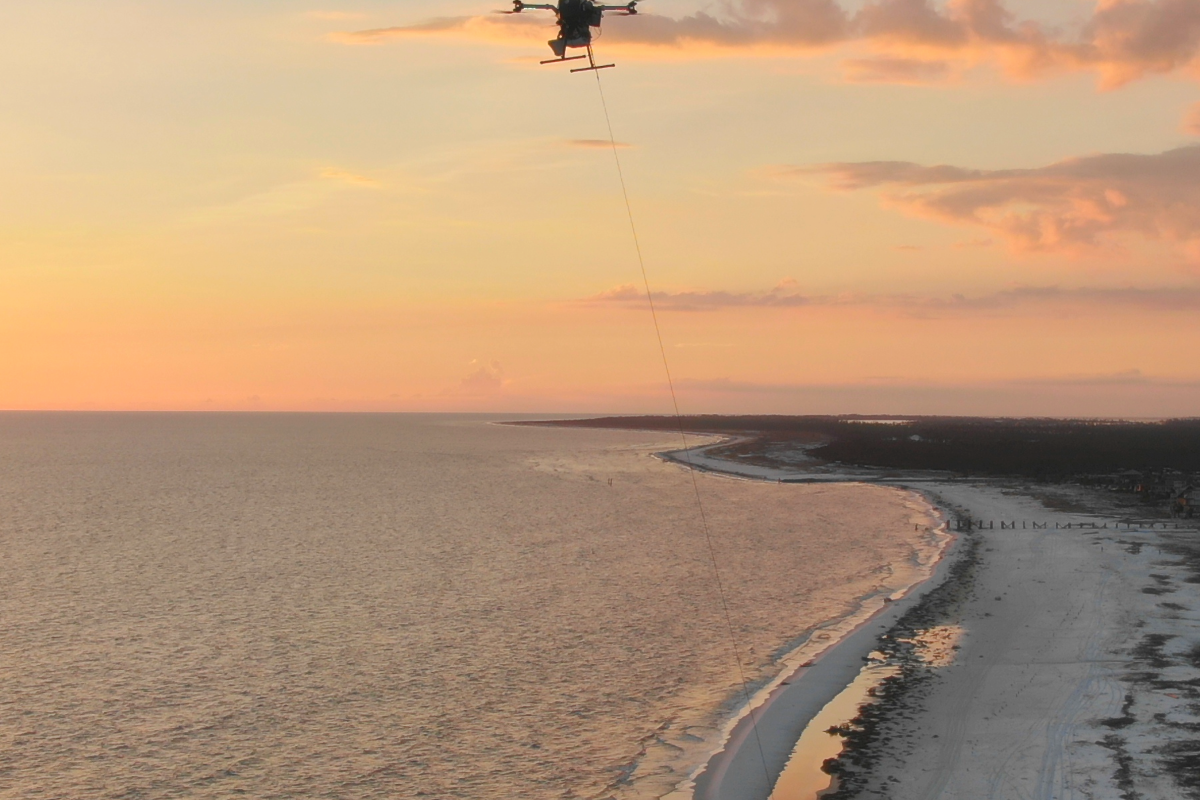
Consider a telecommunications provider that needs to restore connectivity following a hurricane. A first responder who needs continuous aerial visibility over an incident. A military unit requiring an elevated communications relay. Or a security team responsible for maintaining surveillance over a large area.
In each of these scenarios, the objective isn’t necessarily to travel somewhere. It’s to establish a useful capability at elevation and maintain it for as long as the mission requires.
That distinction changes how we should think about drone design.
A conventional battery-powered aircraft must continually manage its remaining energy, even when its only assignment is to hover. Eventually, it must descend, recharge or exchange batteries, and return to its position.
For missions requiring continuous coverage, those interruptions can create challenges that have little to do with the aircraft’s ability to fly.
The question becomes whether the mission actually needs a more advanced flying machine or a more reliable way to keep useful technology in the air.
The Drone May Become the Infrastructure
One of the most interesting developments in unmanned aviation is the growing potential for drones to function as temporary aerial infrastructure.
Traditionally, establishing elevated communications, surveillance, or networking capabilities has often required fixed towers, specialized vehicles, or other ground-based structures. Those solutions remain valuable, but they aren’t always practical when infrastructure has been damaged, access is limited, or a capability is only needed temporarily.
Tethered unmanned aerial systems introduce another option.
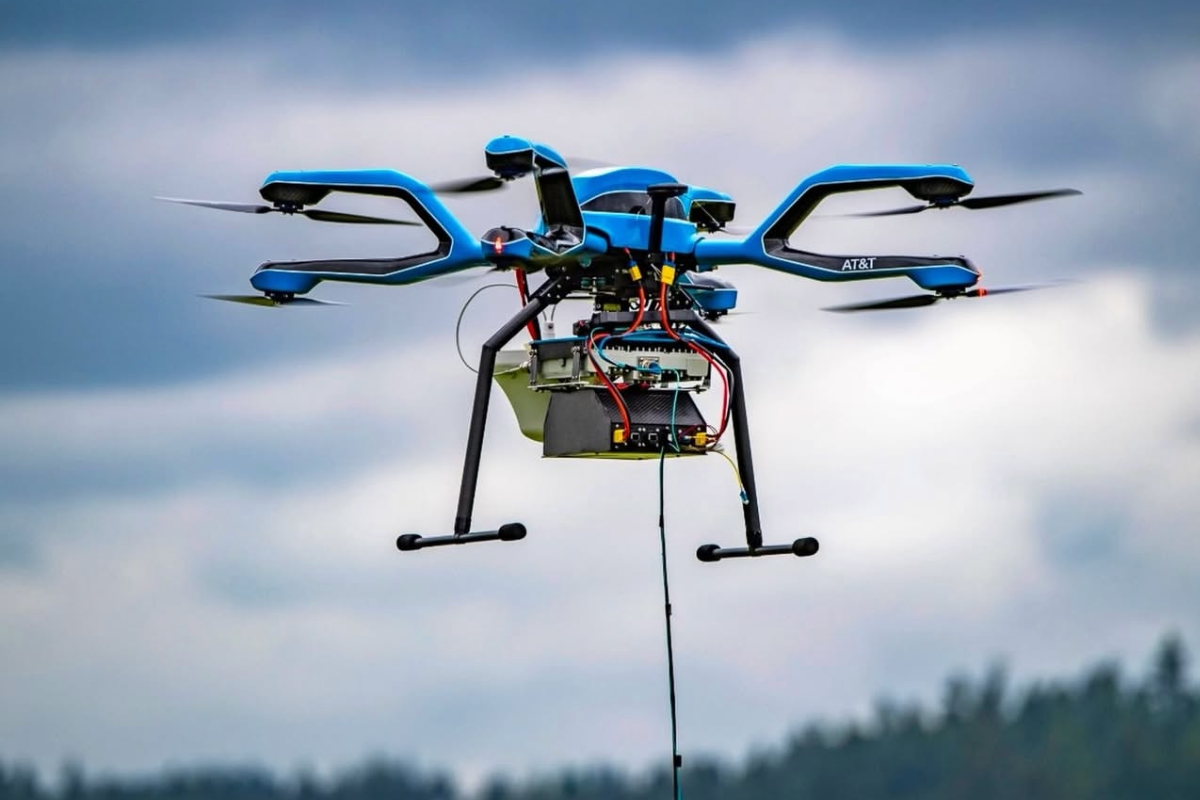
By supplying continuous power from the ground, a tethered aircraft can maintain an elevated position for extended periods without the repeated battery changes associated with conventional drones.
Depending on the system and payload, that elevated position can support telecommunications equipment, intelligence and surveillance sensors, tactical radios, and networking technology.
The aircraft essentially becomes a platform for equipment that would otherwise require a more permanent installation.
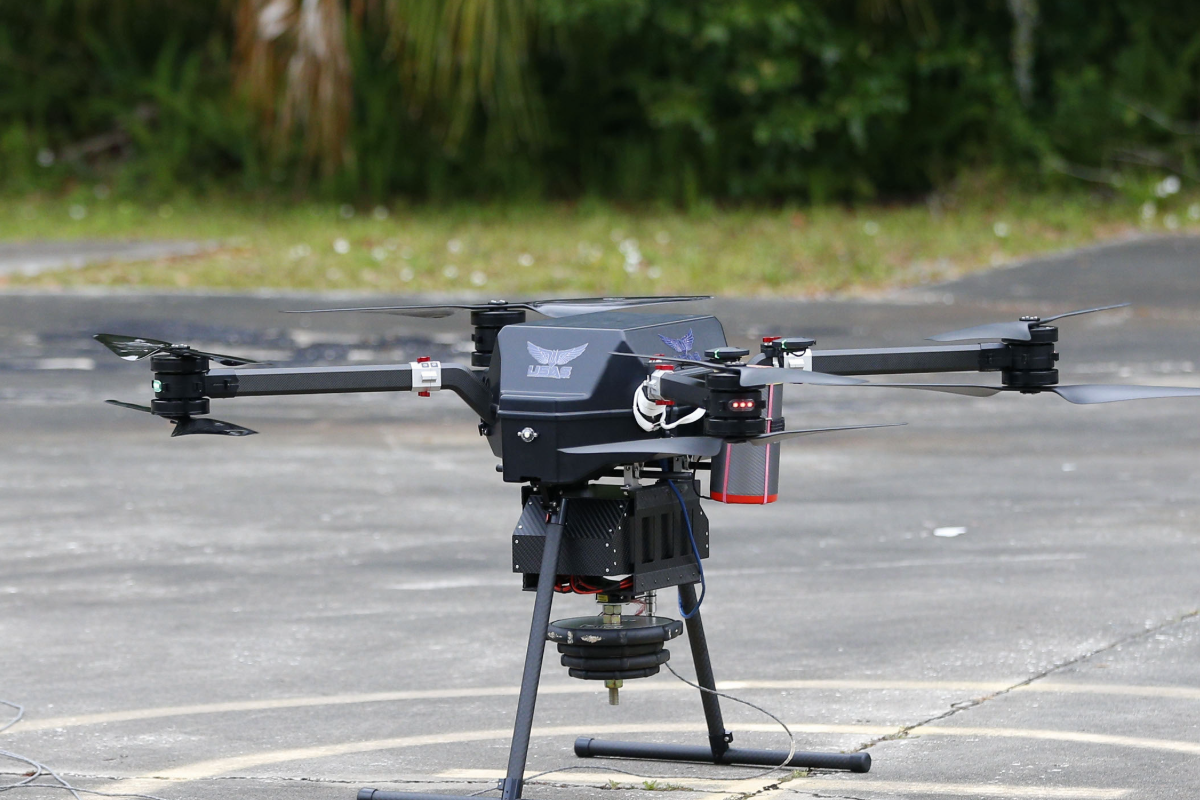
This is the thinking behind the USaS Long Endurance Aerial Platform (LEAP) product line. Rather than focusing exclusively on aircraft performance, LEAP systems are engineered to support the equipment and connectivity that make an elevated position valuable.
The LEAP Solo 5K, for example, provides 5 kW of power for the aircraft and its payloads, supports customer payloads weighing up to 21 pounds, and can operate at elevations up to 400 feet above ground level.
Our larger LEAP Solo 10K and LEAP Solo 20K systems expand those capabilities for increasingly demanding payload requirements, with the LEAP Solo 20K designed to support up to 150 pounds of customer payloads.
These systems demonstrate how the role of a drone can evolve from a vehicle that transports technology into an aerial platform that supports it.
The Next Breakthrough May Happen on the Ground
Much of the attention surrounding drone innovation focuses on what happens in the air. New propulsion systems, improved sensors, autonomous navigation, and more capable aircraft regularly dominate industry discussions.
But for sustained aerial missions, some of the most consequential innovations may take place hundreds of feet below the aircraft.
A tethered drone’s ground station can be much more than a source of electricity. It can manage power distribution, tether deployment, communications, and the connections needed to move information between the airborne payload and the people who depend on it.
At USaS, our ground systems can also serve as communications backhaul hubs, supporting connections to infrastructure such as LEO and GEO satellites, fiber, microwave links, and mobile ad hoc networks (MANET).
That matters because elevating a payload is only one part of making it useful.
A communications relay needs a connection to the broader network. A surveillance system needs a reliable way to deliver information to personnel on the ground. A tactical radio payload must integrate with the communications systems supporting the mission.
Without those capabilities, even the most sophisticated aircraft may provide limited value.
As payload technology becomes more demanding, the infrastructure supporting the aircraft will become increasingly important. Power availability, data capacity, integration, and reliability may ultimately determine which systems are practical for real-world deployment.
In other words, the next generation of drones may be defined as much by the systems beneath them as by the aircraft themselves.
Bigger Payloads Are Changing the Conversation
Another important shift is taking place in the types of equipment organizations want to elevate.
For many commercial and government applications, the drone itself is not the technology providing the greatest value. The payload is.
That payload might be a communications system capable of extending network coverage, a surveillance sensor supporting situational awareness, or a collection of technologies working together to provide an elevated capability.
As those payloads become larger and more power-intensive, conventional battery-powered aircraft face a difficult tradeoff.
Increasing payload weight generally increases power consumption, which can significantly reduce available flight time. An aircraft capable of remaining airborne for a reasonable period with a lightweight payload may have a much shorter endurance when carrying heavier equipment.
For applications that require hours of continuous coverage, that limitation can become a deciding factor.
Tethered systems address the challenge differently by delivering power from the ground, allowing the aircraft and its payloads to operate without relying exclusively on onboard batteries.
This creates opportunities to support equipment that would otherwise be difficult to keep airborne for extended periods.
The result is a shift in priorities. Rather than asking only how long an aircraft can fly, organizations can begin asking what equipment it can support, how effectively that equipment can function at elevation, and how reliably the entire system can sustain the mission.
Nearly a Decade of Experience Has Changed How We See the Future
USaS has been developing and deploying tethered aerial systems since 2017, supporting missions ranging from disaster response and telecommunications restoration to government security applications and major public events.
Our systems have been deployed in response to hurricanes, including Maria, Ian, Beryl, Helene, and Milton, as well as during the 2023 Maui wildfires. We’ve also supported telecommunications and government missions where maintaining elevated capability was central to the assignment.
These experiences have reinforced an important lesson: the value of an unmanned aerial system cannot be measured solely by the specifications of the aircraft.
Real missions introduce changing conditions, unpredictable timelines, evolving communications requirements, and demands that may extend well beyond the original plan.
A system that performs exceptionally well during a controlled demonstration may face very different challenges when deployed for an extended period in the field.
That’s why our approach has increasingly focused on the entire system rather than the aircraft alone.
The ability to deploy efficiently, support demanding payloads, maintain reliable power, and connect airborne technology to ground-based infrastructure is fundamental to making these platforms useful.
And as the industry continues to mature, we believe those capabilities will become even more important.
The Future Isn’t Necessarily Tethered or Untethered. It’s Mission-Driven.
None of this means conventional untethered drones are going away.
There will always be missions that require aircraft to travel significant distances, inspect multiple locations, follow moving targets, or operate beyond the reach of a fixed ground station. Advances in batteries, autonomy, and propulsion will continue to improve those capabilities.
But the assumption that every new generation of drones must fly farther, faster, or more independently overlooks an equally important direction for innovation.
Some missions need mobility. Others need persistence.
Some require an aircraft to travel miles. Others require a platform to maintain a position hundreds of feet above the ground while supporting equipment that people depend on.
The future of unmanned aviation will likely include both, with increasingly specialized systems designed around the requirements of individual missions.
At USaS, we see tremendous potential in that evolution.
As organizations demand more from aerial communications, surveillance, and heavy-lift technology, the distinction between a drone and a piece of deployable infrastructure may become increasingly difficult to define.
And that may be one of the most important changes the industry experiences over the next decade.
The next generation of drones might not be defined by where they can go. It might be defined by what they can make possible once they get there.
Learn more about the LEAP product line and how USaS is advancing tethered unmanned aerial systems at https://unmannedsas.com/products/