Tethered and untethered drones have traditionally been built around two different strengths. A tethered aircraft provides persistence, allowing a drone and its payload to remain elevated for extended periods while receiving continuous power from the ground. An untethered aircraft provides mobility, giving the operator the freedom to move beyond a fixed position and follow a developing situation.
For many applications, that distinction makes sense. If the requirement is persistent overwatch, communications, or surveillance from a fixed elevated position, tethering provides significant advantages. If the requirement is to cover distance or pursue a moving target, an untethered aircraft may be better suited to the task.
The problem is that real-world missions do not always stay within the parameters established at launch. A situation that begins with hours of stationary overwatch can change quickly when a vehicle, vessel, person, or other target begins to move. At that point, an operator traditionally faces a tradeoff: maintain the persistent tethered position or bring the aircraft down and transition to another platform.
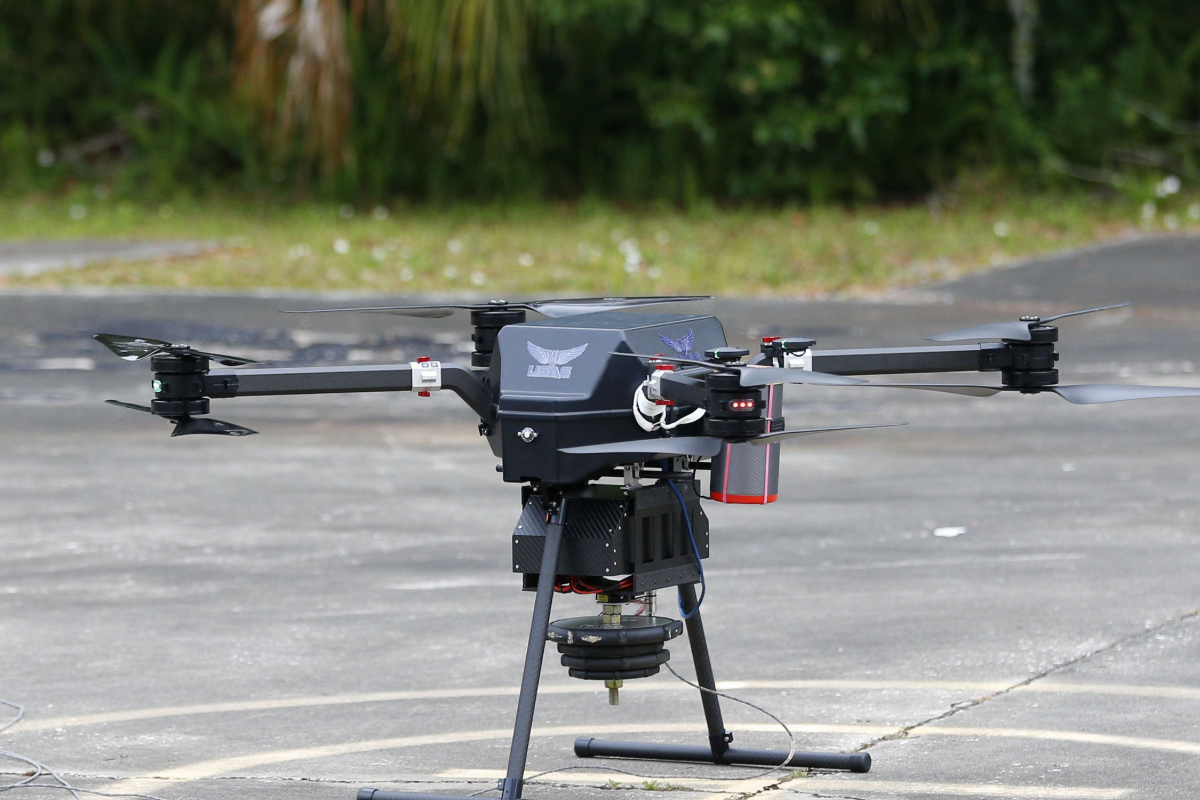
With LEAP Tactical Pursuit, Unmanned Systems and Solutions (USaS) approached that problem differently. Instead of requiring the operator to choose between persistence and mobility before the aircraft ever leaves the ground, Pursuit is designed to provide both within the same system.
Persistent Overwatch Without the Traditional Battery Clock
The value of a tethered aircraft begins with endurance. Conventional untethered drones must carry the energy required for flight onboard the aircraft, which creates an unavoidable relationship between battery capacity, payload weight, and flight time. Once that energy is depleted, the aircraft has to return, land, and recharge or exchange batteries before continuing.
A tethered system changes that equation by supplying power from the ground. LEAP Tactical is designed to operate at elevations of 200 feet AGL standard and up to 300 feet AGL maximum, allowing ISR and communications payloads to remain elevated for extended periods rather than repeatedly interrupting coverage for battery changes. The system can operate for approximately four hours using its battery-based ground power option or for extended periods when connected to an external power source such as 120VAC, a vehicle, or a vessel.
That makes tethering particularly useful when the objective is not simply to put a drone in the air, but to maintain a persistent aerial position. An aircraft can remain overhead supporting surveillance, communications, situational awareness, or other payload-driven requirements while the operator continues working from the ground.
But persistence solves only one part of the problem.
What Happens When the Target Moves?
Consider a drone that has already been providing overwatch for several hours. From its elevated position, the aircraft and its payload are monitoring an area while the tether provides the advantages that made persistent coverage possible in the first place.
Then the situation changes.
A vehicle leaves the area. A person moves beyond the effective observation zone. Activity shifts outside the aircraft’s tethered position. Suddenly, the most important capability is no longer remaining stationary for an extended period. It is being able to follow what is moving.
With a conventional tethered system, the same connection that enables persistent flight also physically limits how far the aircraft can travel from its ground station. An operator may need to retrieve the tethered aircraft and deploy a separate untethered platform, creating a transition precisely when the situation is developing.
LEAP Tactical Pursuit is designed to eliminate that transition.
Pursuit provides the functionality of the LEAP Tactical Overwatch configuration while adding the ability for the aircraft to disengage from its tether and continue flying untethered. Once the tether is released, the aircraft can transition from a persistent elevated position into pursuit, with the system specifications providing for approximately 30 to 50 minutes of pursuit range depending on the configuration and operating conditions.
The same aircraft that was providing persistent overwatch can therefore become the aircraft that follows the target.
The Mission Does Not Have to Be Defined by the Tether
This capability changes the role of the tether itself. Rather than forcing the entire mission to remain within a fixed radius, the tether can support the aircraft for as long as persistence is valuable and then be released when mobility becomes the higher priority.
That means an operator does not necessarily have to predict which capability will matter most before launch. The aircraft can begin tethered, establish an elevated position, and remain there while the situation is relatively static. If circumstances change, Pursuit provides an option to transition away from the tether without first recovering the aircraft and launching a different system.
That distinction is important because real-world requirements are rarely as predictable as controlled demonstrations. Weather can change, payload requirements can change, mission duration can extend, operating locations can shift, and the objective itself can move. Systems intended for field use have to account for those changes rather than simply perform within a predetermined demonstration window. USaS has been deploying tethered UAS in real-world environments since 2017, including disaster response, military exercises, border operations, major events, communications deployments, and other field applications.
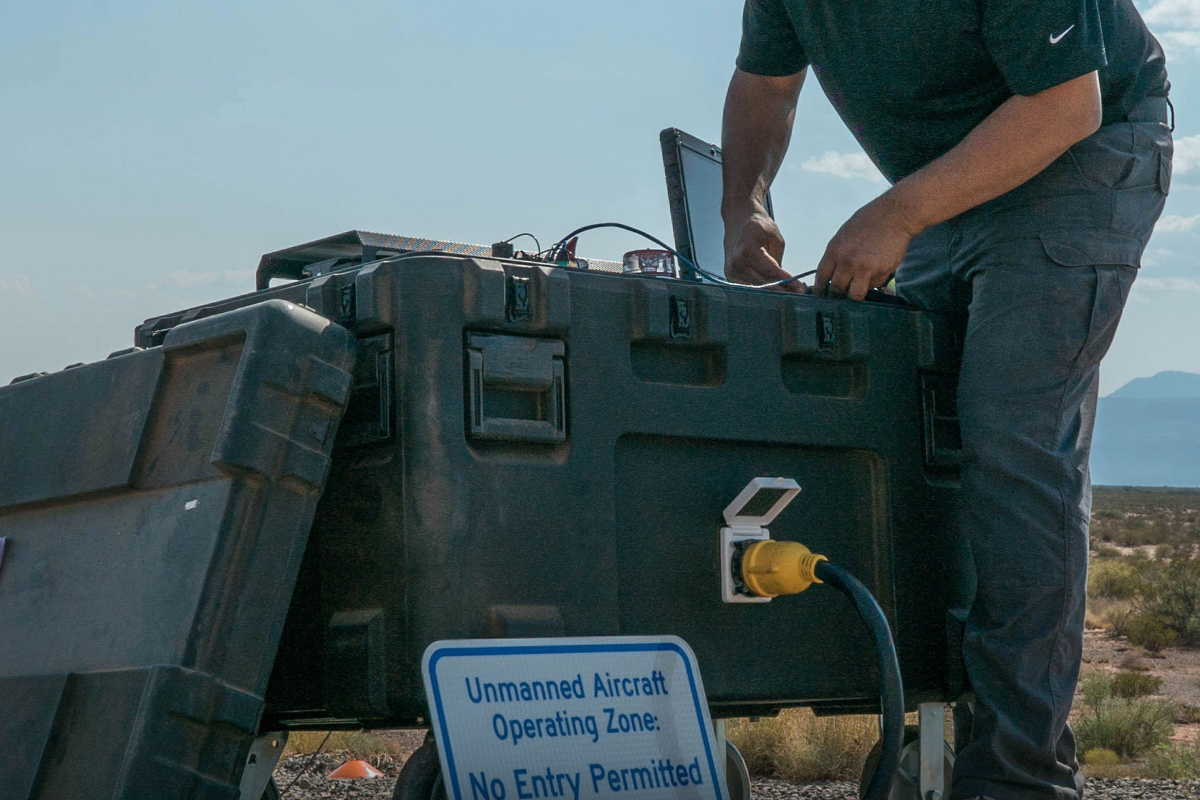
LEAP Tactical was developed around that same idea of adapting the system to different requirements. Its modular architecture supports three configurations with distinct profiles: Overwatch, Pursuit, and Cloak. The complete system is designed to fit within a hardshell case containing the tether system, up to 400 feet of tether, and the aircraft, with deployment and retrieval designed to take approximately 10 minutes.
One Aircraft, Two Very Different Requirements
The value of Pursuit is not simply that a tether can be released. It is what that capability allows the operator to do before the release occurs.
An untethered aircraft launched at the beginning of an extended surveillance requirement immediately begins consuming its finite onboard energy. Even if nothing happens for the first 30 minutes, that flight time has already been used. A tethered aircraft can instead remain on station while the situation develops, preserving the option to transition to untethered flight when mobility actually becomes necessary.
That creates a different operating model: use the tether for persistence when persistence matters, then use onboard flight capability when movement matters.
Instead of treating tethered and untethered aircraft as completely separate categories, Pursuit combines the advantages of both within a single mission profile. The operator can establish persistent overwatch at 200 feet AGL standard and up to 300 feet AGL maximum, maintain that position as long as required by the available ground power configuration, and then disengage the tether if the objective moves beyond the tethered operating area.
From Overwatch to Pursuit Without Starting Over
A mission can change in seconds. The equipment supporting it should be designed with that possibility in mind.
LEAP Tactical Pursuit was developed for situations where persistent overwatch and mobility are not separate requirements, but different stages of the same mission. The aircraft does not have to come down simply because the objective begins moving, and the operator does not necessarily have to deploy an entirely separate drone to continue following it.
It can begin tethered, remain elevated while persistence is needed, and release the tether when the mission requires movement.
For tethered UAS, that raises a more useful question than simply choosing between tethered and untethered flight:
What if you did not have to choose until the mission told you which one you needed?