In tactical operations, the ability to see without being seen has always been an advantage. But as unmanned aerial systems become increasingly integrated into surveillance, reconnaissance, and communications, there is a vulnerability that deserves more attention: the signals connecting the aircraft to the ground.
A drone may be hundreds of feet above an operating area, providing valuable intelligence to personnel below. Its cameras may be collecting detailed imagery, its sensors may be tracking movement, and its operators may have a clear view of the surrounding environment.
But while the drone is watching everything around it, someone else may be watching the drone.
Not necessarily through a camera, but through the radio frequency (RF) signals it relies on to communicate.
For organizations operating in contested environments, that distinction matters.
The Signals You Can’t See Can Still Be Detected
Most unmanned aerial systems depend on wireless communications to exchange information between the aircraft and its ground controller. These connections support flight commands, telemetry, video transmission, and other essential functions.
Under normal operating conditions, these systems can work extremely well. But in environments where electronic surveillance, signal detection, or intentional interference are concerns, reliance on RF communications introduces additional considerations.
RF emissions can potentially be detected, analyzed, or used to estimate the location of transmitting equipment. Depending on the technology involved, an adversary may be able to identify the presence of an unmanned aircraft or gather information about its communications activity.
Encryption can protect the information being transmitted, but it does not necessarily conceal the existence of the transmission itself.
That creates an important distinction between protecting the contents of a communication and reducing the signals that reveal communication is taking place.
For tactical teams, both deserve consideration.
What If the Aircraft Didn’t Need an RF Connection to the Ground?
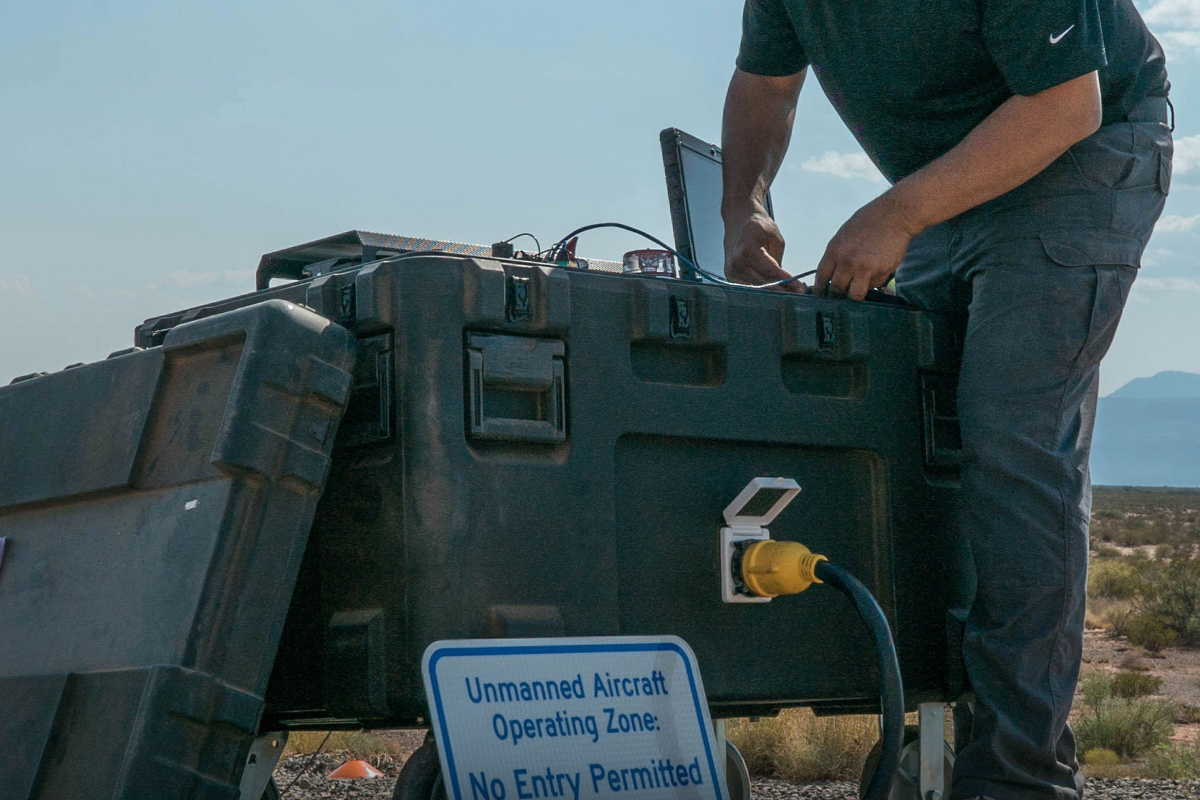
At Unmanned Systems and Solutions (USaS), we’ve spent years developing tethered unmanned aerial systems that combine persistent aerial capability with ground-based power and communications infrastructure.
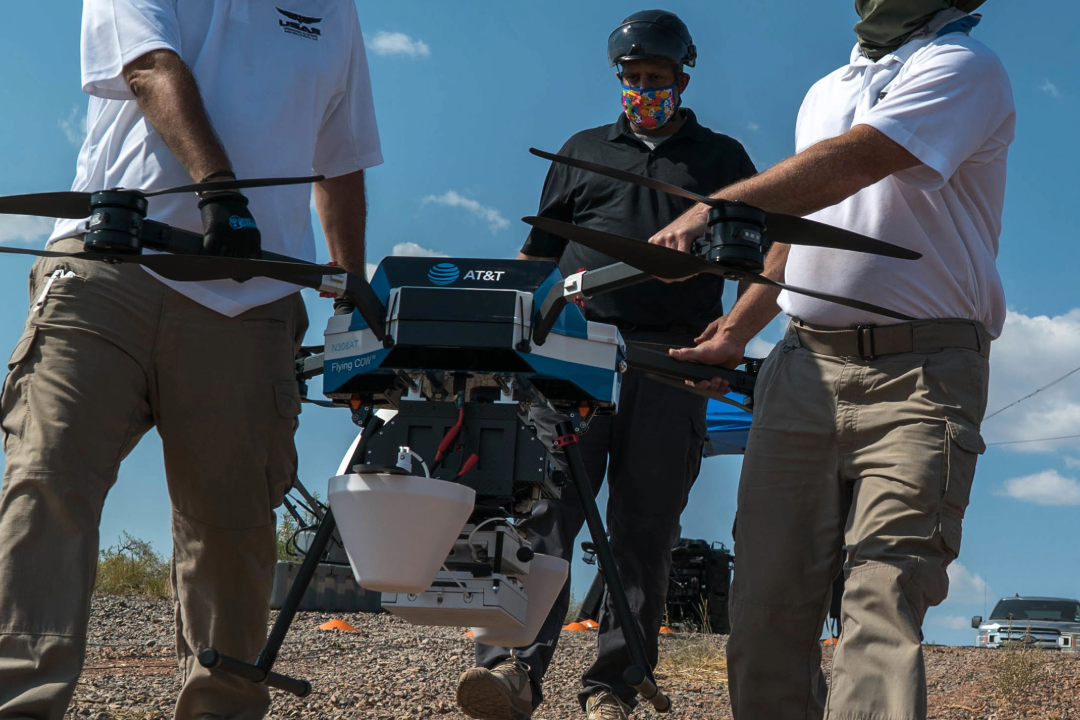
With LEAP Tactical, we’ve applied that experience to a smaller, highly mobile system designed for operators who need rapid deployment and flexibility in the field.
One configuration, LEAP Tactical Cloak, addresses the challenges associated with conventional wireless command-and-control connections.
Rather than depending on an RF link between the aircraft and its ground station, Cloak uses a hybrid tether incorporating fiber-optic communications.
This allows command-and-control signals and payload data to travel through a physical connection between the aircraft and the ground.
The result is an aircraft that can operate without transmitting the air-to-ground RF signals typically required for wireless flight control and data transfer.
That capability can be particularly valuable in environments where RF emissions are undesirable, communications are contested, or operators need greater control over their electronic signature.
Importantly, eliminating the air-to-ground RF connection does not mean every component of an operation is automatically free of RF emissions. External communications and backhaul equipment may still use wireless technologies depending on the configuration.
The advantage is the ability to remove a significant source of RF transmission from the aircraft’s command-and-control architecture.
Why 200 Feet Can Make a Difference
LEAP Tactical is designed around a standard tether length of 200 feet, with a maximum of 300 feet.
That elevation can provide a useful vantage point for surveillance, observation, and communications while allowing the system to remain connected to equipment on the ground.
For first responders, an elevated camera can help provide visibility over terrain, structures, or developing incidents. For tactical teams, it can support sustained observation of an area without requiring an aircraft to continuously reposition.
But elevation alone is not what makes the system different.
The combination of elevated positioning, persistent power, and fiber-optic data transmission allows operators to maintain an aerial perspective while reducing dependence on conventional wireless aircraft communications.
Instead of treating the drone as a separate aircraft that must constantly exchange signals through the air, the tether becomes part of the system’s power and communications infrastructure.
A Different Approach to Persistence
Conventional battery-powered drones often require operators to plan around limited flight durations. When batteries run low, the aircraft must return, interrupting the aerial coverage it was providing.
LEAP Tactical approaches endurance differently.
The system can operate for up to four hours using its ground-based battery power supply, with extended operation available when connected to an external power source.
For operations requiring sustained observation, this can reduce the need for repeated landings and battery changes.
When combined with Cloak’s fiber-optic communications capability, operators gain two distinct advantages: extended aerial persistence and reduced reliance on air-to-ground RF transmissions.
These capabilities address different challenges, but together they expand the options available to teams working in demanding environments.
The Future of Tactical Drones Isn’t Just About What They Can See
As unmanned systems continue to evolve, conversations about performance often focus on cameras, sensors, flight speed, autonomy, and aircraft size.
Those capabilities matter. But so does the infrastructure supporting the aircraft.
How does the drone communicate? What signals does it transmit? How long can it remain in position? What happens when the operating environment becomes electronically contested?
These questions deserve as much attention as the specifications of the aircraft itself.
At USaS, we believe the next generation of tactical unmanned systems must be evaluated as complete systems, not simply flying platforms.
LEAP Tactical Cloak reflects that approach by combining portable tethered operation with a fiber-optic communications pathway designed to reduce the need for detectable air-to-ground RF transmissions.
Because sometimes, the most important thing about your drone isn’t what it can see.
It’s what others can detect.
Learn more about LEAP Tactical: https://unmannedsas.com/leap-tactical/